

As the 2026 NFL Draft approaches, scouts are digging deeper into prospects to separate true stars from players with hidden risks.
A few names that had been climbing boards are now raising red flags, threatening to impact their draft stock. Indiana wide receiver Omar Cooper Jr., Arizona State wide receiver Jordyn Tyson, and Georgia tight end Oscar Delp each bring upside, but also significant concerns that could make teams think twice.
In this week’s NFL Draft Buzz, we break down the issues surrounding each player and what it means for their potential landing spots.
Wide receiver moving up the NFL Draft board
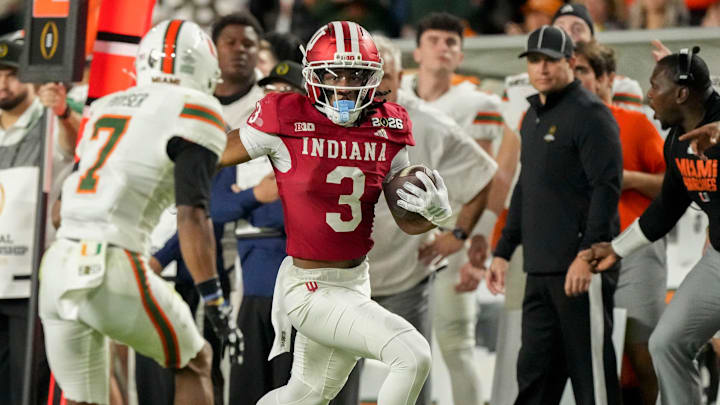
A wide receiver who keeps moving up draft boards is Omar Cooper Jr. Coming into the season, I only had a sixth-round grade on him, but after earning second-team All-American honors, that jumped to a late Day 2 grade. Now, after an impressive NFL Combine that included a 4.42 40-yard dash and a 37-inch vertical, some analysts are starting to project him as a first-round pick.
When you look at what’s driving the rise, it starts with his ability after the catch. Last season, he finished fourth among wide receivers per PFF with 27 forced missed tackles and nearly 500 yards after the catch. He shows the strength to run through contact along with the quickness and elusiveness to make defenders miss in space.
There are a couple other positives that stand out. He has strong hands and does a good job attacking the ball, which showed with him catching 50% of his targets in tight coverage while only dropping three passes. He’s also a strong run blocker, which is an underrated part of playing in the slot.
OMAR COOPER UNREAL CATCH FOR THE TD 😱🤯
— FOX College Football (@CFBONFOX) November 8, 2025
WHAT A GAME. WHAT A CATCH. @IndianaFootball pic.twitter.com/PhHzKjuVB9
There are concerns though. His route running needs work, especially getting in and out of his breaks cleaner. The bigger issue with him though is his work ethic. He only had 28 catches in 2024 and 18 in 2023, so the question is whether this past season is the new standard or just a one-year jump, especially once he gets paid.
"Omar Cooper's got the ability to be an outstanding football player. He's got to do it day out, play in and play out, He's got to get rid of the inconsistency, set higher standards for himself, and have the discipline and commitment to achieve his goals and become what he wants to be. The talent’s there, the flashes are there."Indiana head coach Curt Cignetti
The Philadelphia Eagles and Dallas Cowboys are two teams that have brought him in for visits and make sense as landing spots in the early 20s. If he stays motivated, you’re getting a physical, sure-handed receiver who can create after the catch. If not, taking him in the first round could end up being a reach.
More bad news for Jordyn Tyson
While Indiana’s Omar Cooper Jr. is moving up draft boards, the opposite is true for Arizona State’s Jordyn Tyson. He was unable to work out at the Arizona State Pro Day, after also missing the NFL Combine due to injury.
This continues a long injury history. This season he missed time with a hamstring injury, which caused his yards per game, receptions per game, and yards per catch all to drop. On top of that, he suffered season-ending injuries in both 2024 and 2022.
That lengthy injury history will likely impact where he goes in the 2026 NFL Draft. With at least six receivers graded similarly to him, teams may be hesitant. Combined with the injury concerns, there’s a strong chance he could slide to the second round.
Possible Kenneth Walker III replacements in Seattle
The biggest question mark on the Super Bowl champion Seahawks offense is at running back. That’s because they let last year’s leading rusher, Kenneth Walker III, walk in free agency after he signed a three-year deal with the Kansas City Chiefs.
On top of that, their second-leading rusher Zach Charbonnet is coming off a torn ACL suffered in the playoffs and will likely miss time early next season. Seattle did add former Green Bay Packers back Emanuel Wilson in free agency, but he’s more of a physical runner than a true playmaker. They still need a dynamic option, which makes running back a clear Day Two target in the 2026 NFL Draft.
One name that fits what Seattle needs is Arkansas back Mike Washington Jr. He’s one of the most explosive runners in the class and backed that up at the Combine, running a 4.33 forty at 6-foot-1, 223 pounds. That speed shows up on tape, averaging 6.4 yards per carry and ripping off 17 runs of 15+ yards. He also brings value as a receiver, which Seattle needs considering Walker led Seattle running backs with 31 catches last season.
'I'M LIKE THAT!" 😤
— ESPN (@espn) November 22, 2025
Mike Washington Jr. TRUCKED the Texas defender for the TD 🔥 pic.twitter.com/5iJ7tsfdBn
The issue is Washington might not make it to Seattle in the second round. If that happens, the third round could be the sweet spot to address the position.
One option there is Washington’s Jonah Coleman, who Seattle has already brought in for a visit. He doesn’t have elite top-end speed, but he fits what they like. He runs with good vision, making him a natural fit in a zone scheme, and still creates chunk plays with 24 runs of 15+ yards over the past two seasons. He also brings strong contact balance, forcing 35 missed tackles last year.
At the end of the day, it’s unclear exactly who Seattle will take, but one thing is pretty obvious—they’re not leaving Day Two of the draft without adding a running back.
Scouting Jacob Rodriguez
The most productive player in the 2026 NFL Draft is Texas Tech’s Jacob Rodriguez, who is coming off a truly elite season. He was named the top defensive player in college football, taking home the Chuck Bednarik Award, Butkus Award, and Lombardi Award. He also posted a 93.0 PFF grade, the highest in college football. Production-wise, he finished with 115 tackles, 10 tackles for loss, seven forced fumbles, and four interceptions.
He also showed plenty of elite traits as an NFL prospect. The biggest one is his instincts. He is consistently in the right position to make plays and is one of the smartest defenders in this class. He also brings impressive coverage ability for a middle linebacker, which showed with his four interceptions, leading all linebackers this season. That ties into another strength, his ability to create turnovers. Along with the interceptions, he led the nation with seven forced fumbles. Another big plus is his ability to fight off blocks, which is one of the most important traits for a linebacker.

While there is no doubt Rodriguez is one of the better linebackers in this class, there are some concerns. One is his size, as he is on the shorter side at 6-foot-1 with 30 ⅞-inch arms. Another is that he can be overaggressive at times, which leads to missed tackles and overrunning plays.
When it comes to where he could go, I have a second-round grade on him and rank him as the third-best middle linebacker in the class. Teams like the Carolina Panthers, Denver Broncos, and Tampa Bay Buccaneers all make sense as potential fits.
Elite tools+ average production= risky prospect
One of the more impressive Pro Days recently was turned in by Oscar Delp. His best number was an elite 4.48 in the 40-yard dash, along with a 38-inch vertical. The question is simple: is Delp a great athlete but just an average NFL Draft prospect who gets overdrafted, or is he just scratching the surface?
Oscar Delp is a TE prospect in the 2026 draft class. He scored a 9.82 RAS out of a possible 10.00. This ranked 26 out of 1388 TE from 1987 to 2026.https://t.co/BSHyixQrAs pic.twitter.com/WSdtfCbba2
— RAS.football (@MathBomb) March 22, 2026
On the production side, there are real concerns. He never had more than 24 receptions in a season and was outproduced by fellow Georgia tight end Lawson Luckie in 2024, who was a sophomore at the time.
There are also some red flags when you look at his traits. He has struggled in contested catch situations, finishing with just two contested catches in his career according to PFF. That’s a problem because he’s going to be asked to make those plays at the next level. Despite his speed, he also wasn’t used much as a downfield threat. As a blocker, there are questions too. He’s only 245 pounds and has a tendency to lunge block.
That said, there are things working in his favor. He has the speed to create plays and pick up yards after the catch, with over half of his production coming in that area this past season. He’s also a crisp route runner, and that combined with his speed should allow him to separate. Another plus is his character as Georgia Head Coach Kirby Smart has described him as a leader by example.
My verdict is simple: he’s likely to be drafted too high. Some have him as the second-best tight end in the class, but that’s too rich. I have him as the eighth-best tight end with a fifth-round grade. The tools are there, but betting on a player to suddenly produce in the NFL when he never did in college is a risk.
 Add us as a preferred source on Google