

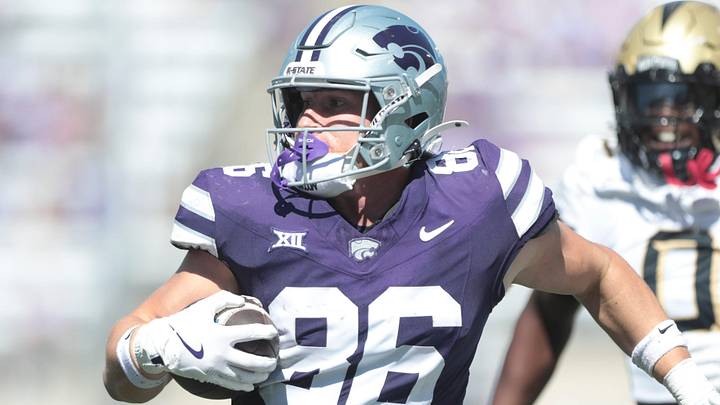
The 2027 tight end class lacks the high-end talent of recent years, as LSU's Trey'Dez Green is the only player who currently carries a top-50 grade on my board. While this year's group may not produce a first-round pick, there are still several intriguing prospects who could provide tremendous value later in the draft. Players such as Garrett Oakley and Luke Reynolds possess the traits to outperform their draft projections and emerge as steals for NFL teams.
In the latest edition of the NFL Mocks' summer scouting series, we break down the top tight end prospects in the 2027 NFL Draft class.
Top Player: Trey'Dez Green, LSU
For the first time since 2022, the tight end position may not produce a first-round pick, with LSU's Trey'Dez Green currently holding the top spot on my board despite carrying only a second-round grade. Green stands out because of his rare physical tools, including his 6-foot-7 frame and impressive athleticism for a player of his size. He is a dangerous red-zone weapon, setting the LSU tight end record with seven touchdown receptions last season, and moves more like a large wide receiver than a traditional in-line tight end. However, Green is still relatively lean for the position and does not bring much physicality as a blocker. He also struggled with drops, letting 13% of his targets slip through his hands last season. Even with those concerns, his combination of size, movement skills, and playmaking ability makes him the top tight end prospect in the 2027 class.
Cheat Code@TreyDez_Green pic.twitter.com/HXYBJkKl8g
— LSU Football (@LSUfootball) April 2, 2026
Guy I would stand on the table for: Garrett Oakley, Kansas State
Kansas State's Garrett Oakley is a player I am considerably higher on than the consensus, grading him as an early Day 3 prospect. Oakley brings several traits that translate well to the next level, beginning with his 6-foot-5 frame, which makes him an effective red-zone target. He already holds the Kansas State record for touchdown receptions by a tight end and consistently uses his size to create matchup problems. Oakley also possesses better speed than many tight ends of his stature, making him a reliable weapon in the short and intermediate passing game. As a blocker, he stands out for his strong footwork and effectiveness in the run game. The primary concern for NFL evaluators will be his limited agility when adjusting to the football, which contributed to a 14% drop rate last season. Even with that flaw, Oakley's combination of size, athleticism, production, and blocking ability makes him one of my favorite tight end prospects in the class.
Overrated: Jamari Johnson, Oregon
Many evaluators view Jamari Johnson as the top tight end prospect in the 2027 NFL Draft, but that projection feels a bit aggressive. While Johnson has excellent size at 6-foot-5 and 257 pounds and can be difficult to bring down after the catch, he lacks the elite athleticism typically found in top NFL tight end prospects. He is somewhat stiff as a runner in space, possesses only solid speed, and may not develop into a major vertical threat at the next level. Johnson is also still refining his run blocking, making him more of a developmental prospect than a complete tight end. For those reasons, he currently carries a third-round grade on my board.
Sleeper: Luke Reynolds, Virginia Tech
Virginia Tech's Luke Reynolds is a player I believe is being significantly undervalued entering the 2027 NFL Draft cycle. While NFL Mock Draft Database currently assigns him a consensus seventh-round grade, Reynolds carries a third-round grade on my board. The former five-star recruit possesses several traits that should appeal to NFL evaluators, starting with his quickness and ability to create separation as a receiver. He is dangerous with the ball in his hands, combining strength, competitiveness, and surprising elusiveness for a 6-foot-4, 250-pound tight end. Reynolds consistently turns short receptions into larger gains and plays with a physical edge after the catch. His biggest area for improvement remains run blocking, where inconsistent footwork can cause balance issues and missed assignments. If he continues to develop in that area, Reynolds has the tools to significantly outperform his current draft projection.

Biggest risk: Lawson Luckie, Georgia
Lawson Luckie is one of the most difficult evaluations in the 2027 tight end class because his physical tools suggest he could become a mid-round selection, yet his production has not matched his potential. Luckie possesses the athleticism and speed to consistently create separation and ranks among the better athletes at the position. However, his game remains unrefined in several key areas, particularly route running and hand placement as a blocker. Those shortcomings have limited both his role and production within Georgia's offense. Last season, Luckie recorded just 15 receptions for 158 yards and has yet to establish himself as the Bulldogs' primary tight end target. Until the production catches up with the talent, he remains one of the riskiest projections in the class.
Player who could have a breakout year: DJ Vonnahme, Iowa
Iowa tight end DJ Vonnahme appears poised for a breakout season after finishing last year on a strong note. After failing to top 60 receiving yards in any of his first eight games, Vonnahme eclipsed 90 yards in each of his final two contests, including a 146-yard performance against Vanderbilt in the ReliaQuest Bowl. If Iowa receives consistent quarterback play, that late-season momentum could carry over into a major campaign, as Vonnahme has the traits to become the next standout tight end to emerge from the program. As a prospect, he displays reliable hands, dropping only two passes last season, and shows good quickness off the line of scrimmage. He is also a physical blocker, although he still needs to refine his technique, particularly when it comes to driving his feet and sustaining blocks after contact.
Overall rank
1. Trey'Dez Green, LSU (second round)
2. Jamari Johnson, Oregon (third round)
3. Luke Reynolds, Virginia Tech (third round)
4. Terrance Carter Jr., Texas Tech (fourth round)
5. DJ Vonnahme, Iowa (fourth round)
6. Garrett Oakley, Kansas State (fourth round)
7. Brett Norfleet, Missouri (fifth round)
8. Benjamin Brahmer, Penn State (sixth round)
9. Peter Clarke, Temple (sixth round)
10. Lawson Luckie, Georgia (sixth round)
11. Dylan Wade, UCF (sixth round)
12. Brody Foley, Louisville (seventh round)
13. Decker DeGraaf, Washington (seventh round)
14. Ethan Davis, Tennessee (seventh round)
15. Hayden Hansen, Oklahoma (seventh round)
16. Dorian Thomas, California (seventh round)
 Add us as a preferred source on Google