

The tight end prospect pool is one of the most interesting year-to-year evaluations. Recent years have seen athletic freaks light up the combine only to flame out in the NFL, as well as blocking-specific TEs that find a long-term role at the next level.
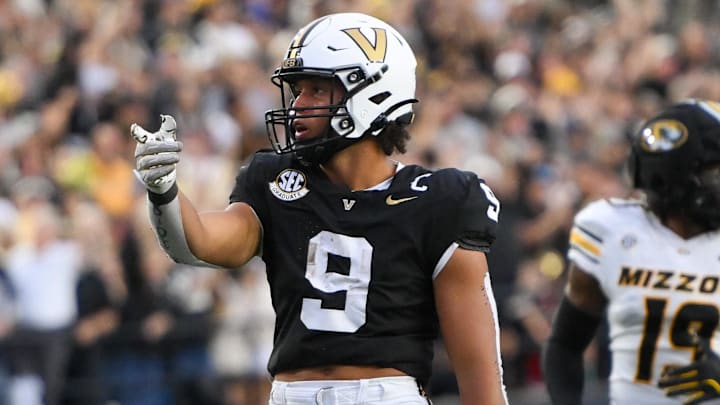
Oregon's Kenyon Sadiq is the consensus top prospect at the TE position for the 2026 NFL Draft, but one player consistently rising up draft boards is Vanderbilt's Eli Stowers. A converted quarterback, he stacked back-to-back productive seasons to finish his collegiate career, and offers franchises an athletic profile that's nearly unheard of.
He clocked in at 4.51 seconds in the 40-yard dash and made waves throughout the NFL Draft media with his record-breaking 45.5" vertical jump, which was 2 full inches higher than the previous high. What he can do in the passing game as both a reliable target and highlight reel catch magnet is utterly awe-inspiring.
Imagining what Stowers can become if he taps into his upside can give teams every reason to select him early in the draft, but there are more than a few concerns that should generate considerable pause before handing in the draft card.
Finding a spot for Stowers
The term "tweener" is often used on the defensive side of the ball, with players' frames creating a fluid profile between edge rusher/defensive lineman, linebacker/safety, etc. In Stowers' case, however, it's the right label.
Imagining him as a 6'4", 235-pound wide receiver makes evaluating him even more interesting. It would give him plenty of size-based matchup advantages, but his compact movement skills and twitchiness would certainly be tested against more agile cornerbacks. On the flip side, finding a viable defensive alignment that can account for his receiving ability at tight end would be a headache for defensive coordinators. In the same sense, though, his extreme lack of blocking finesse doesn't inspire confidence in his ability to develop into more than an H-back.
Teams taking notice
On April 7, NFL Network analyst Ian Rapoport reported that NFL teams have evaluated him as a receiver rather than a tight end, a major development in his pre-draft process. If he were to make the transition to WR, it would likely come with the installation of a weight-loss program to elevate his already-impressive athletic tools.
In the same breath, that opens up even more questions about how he projects at the next level. He tore apart defenses from the TE position at Vanderbilt, but he would need to see some substantial improvement to his overall burst.
The idea of Stowers is tantalizing, wherever you put him. A red zone dominator who can stretch the field and beat defenses with his route running, physicality, explosiveness, and yards-after-catch toolset.
The problem arises when you look ahead to the season, with the possibility that training camp starts, and the team that selects him can't find a true position for him. His upside is unquestionable, but there needs to be legitimate conversations about the dangers of using a premium pick to acquire a player who may not have anywhere to play.
 Add us as a preferred source on Google